H2 2025

Salinae Hydrogen Storage project

The Salinae Hydrogen Storage project

The Salinae Hydrogen Storage project

The project

A potential salt cavern hydrogen storage development in Cheshire.

Uniper aims to be carbon-neutral by 2040*. The company is gradually adding renewable and low carbon gases to its gas portfolio and is developing a hydrogen portfolio with the aim of a long-term transition.

As part of this, Uniper is exploring the potential to develop a salt cavern hydrogen storage facility, near Warmingham in Cheshire. The potential development is known as the Salinae Hydrogen Storage project. Uniper is working on the Salinae Hydrogen Storage project with British Salt who own the mineral rights and whose existing operations are on the site.

About the project

About the project

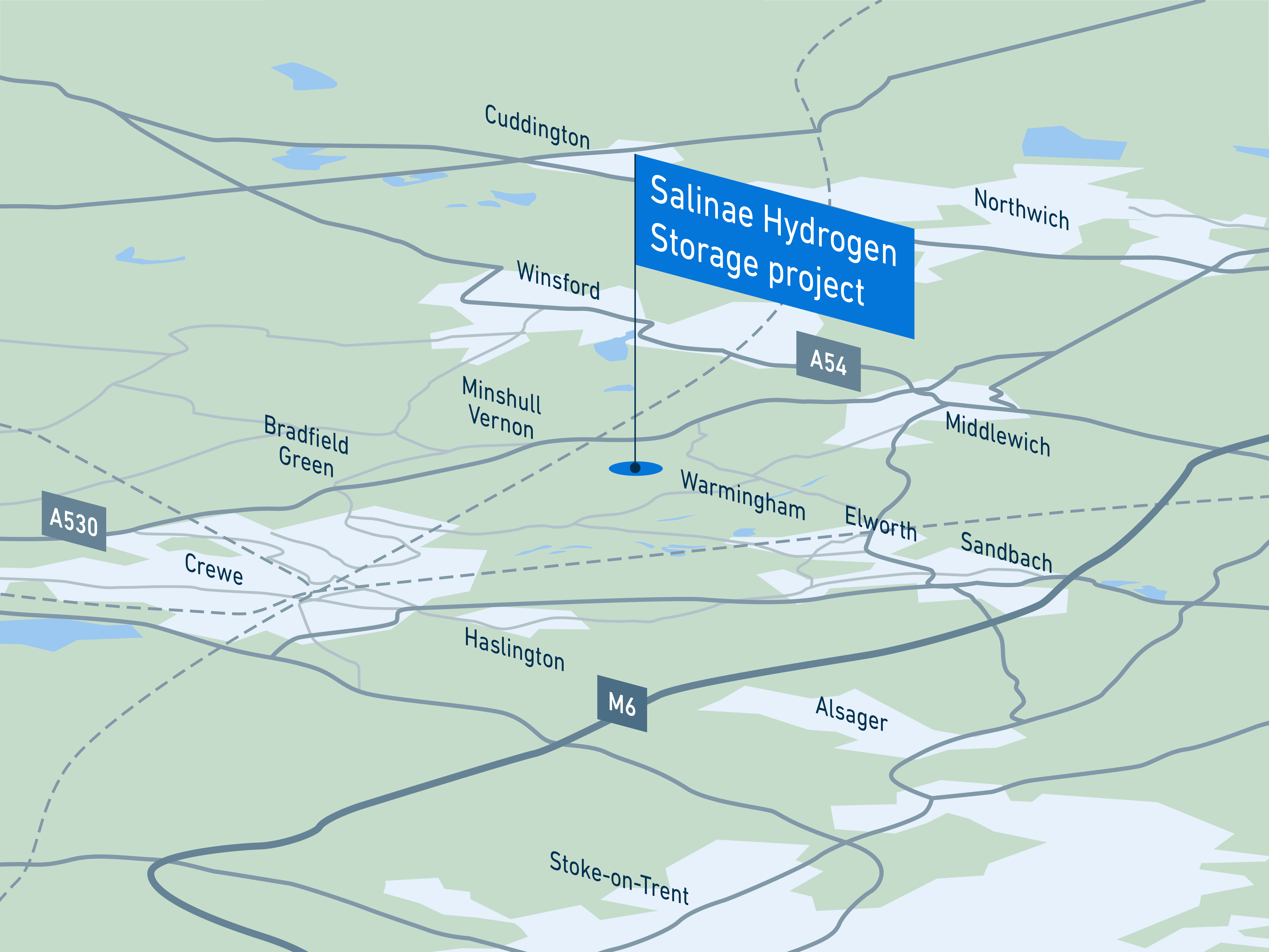
The Salinae Hydrogen Storage project is the potential development of a salt cavern hydrogen storage facility, near Warmingham in Cheshire, a few miles from Uniper’s existing gas storage facility at Holford.

Uniper and British Salt have agreed a Feasibility Development Agreement which gives Uniper the sole rights to explore the site’s potential for hydrogen storage. British Salt will add steps to its existing solution mining plans to support Uniper in gathering data with the aim of evaluating the site’s potential.

The site has the potential to store up to 400GWh of hydrogen1  across up to 13 caverns. This could help to provide confidence for industries looking to fuel switch to hydrogen and away from fossil fuels, by providing a reliable source of hydrogen, complementing other sources.

Uniper is also exploring the potential to include hydrogen production capability as part of the Salinae Hydrogen Storage project. This would likely include up to 50MW electrolytic (green) hydrogen production, directly connected to the proposed storage facility. 

The project will be subject to Uniper being granted a development consent order (DCO) for a hydrogen facility. In the absence of a hydrogen market, and as a precursor to a competitive market framework, Uniper will also need UK Government to develop a bespoke business model to bring forward this first of a kind technology. 

Any future arrangements for the storage or use of hydrogen would be subject to further agreements if the project progresses beyond the feasibility stage.
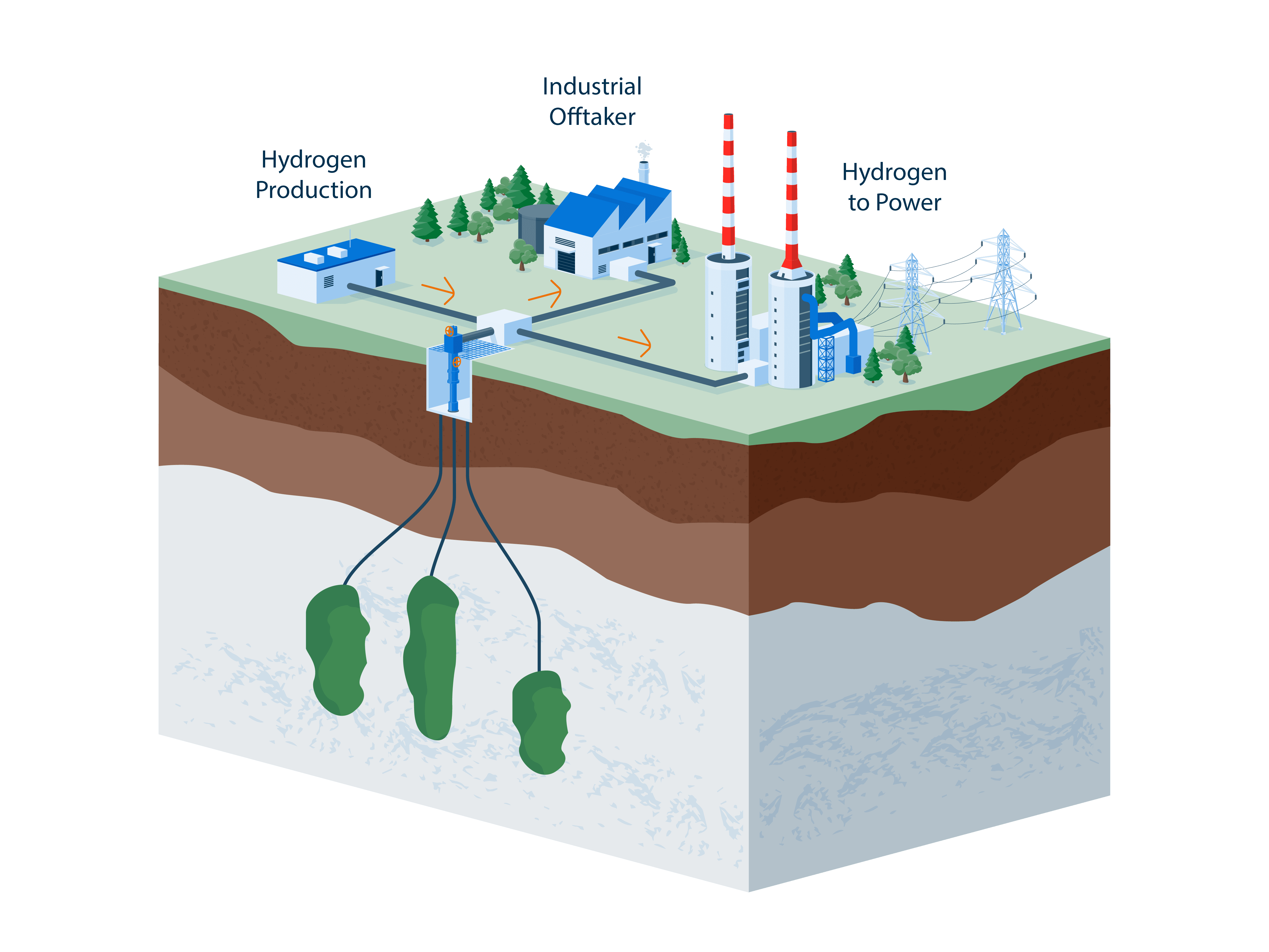
Hydrogen is a key fuel for industries that are difficult to electrify, such as chemical production and refining, steelmaking, cement production, and transport. Once produced, hydrogen can also be refined into renewable liquid fuels – such as synthetic diesel and sustainable aviation fuel – providing a clean energy source for vehicles and whole industries that currently rely on carbon-intensive fuels. 

Hydrogen storage offers the potential to store renewable energy, enabling excess wind and solar power to be utilised for hydrogen production, rather than being curtailed as is currently the case. Underground cavern storage systems for hydrogen can compensate for short-, mid- and long-term fluctuations in production and demand, and are very efficient due to their rapid injection and withdrawal capabilities.

Uniper is already investigating the potential for future hydrogen storage with two pioneering pilot projects in north-west Germany, one of which will provide valuable experience for the Salinae Hydrogen Storage project. The Hydrogen Pilot Cavern Krummhörn project is a salt cavern storage facility which we have established in order to test the construction and operation of a 100% hydrogen storage facility under real conditions. The work to develop hydrogen-ready caverns took place during the first half of 2024 and the facility was opened in August 2024.

Developing sufficient storage capacity in the UK will require existing underground facilities to be converted to meet demand and new facilities, such as the Salinae Hydrogen Storage project, to be built. 


Hydrogen Storage Diagram 2 Salinae UK

Cheshire, including the area around Warmingham, has a geology that is highly favourable for salt cavern gas storage which would be able to significantly contribute to the large-scale seasonal and daily flexibility needs of the UK's future energy system.

Salt extraction in the region dates back to Roman times and the area has also been home to salt cavern gas storage facilities for a number of years. Uniper’s Holford gas storage facility at Byley has been in operation since 2011.

The development of a hydrogen storage facility could create opportunities during the construction phase and once it becomes operational, provide permanent jobs. It could also help to safeguard jobs in the wider area, by providing confidence for industries looking to fuel switch to hydrogen and away from fossil fuels, by providing a reliable source of hydrogen, complementing other sources.

If consented and developed, the proposed hydrogen storage facility could help to support the decarbonisation and economic growth of the region, supporting industrial customers to transition to a net zero future. 


Salinae Hydrogen Storage project map

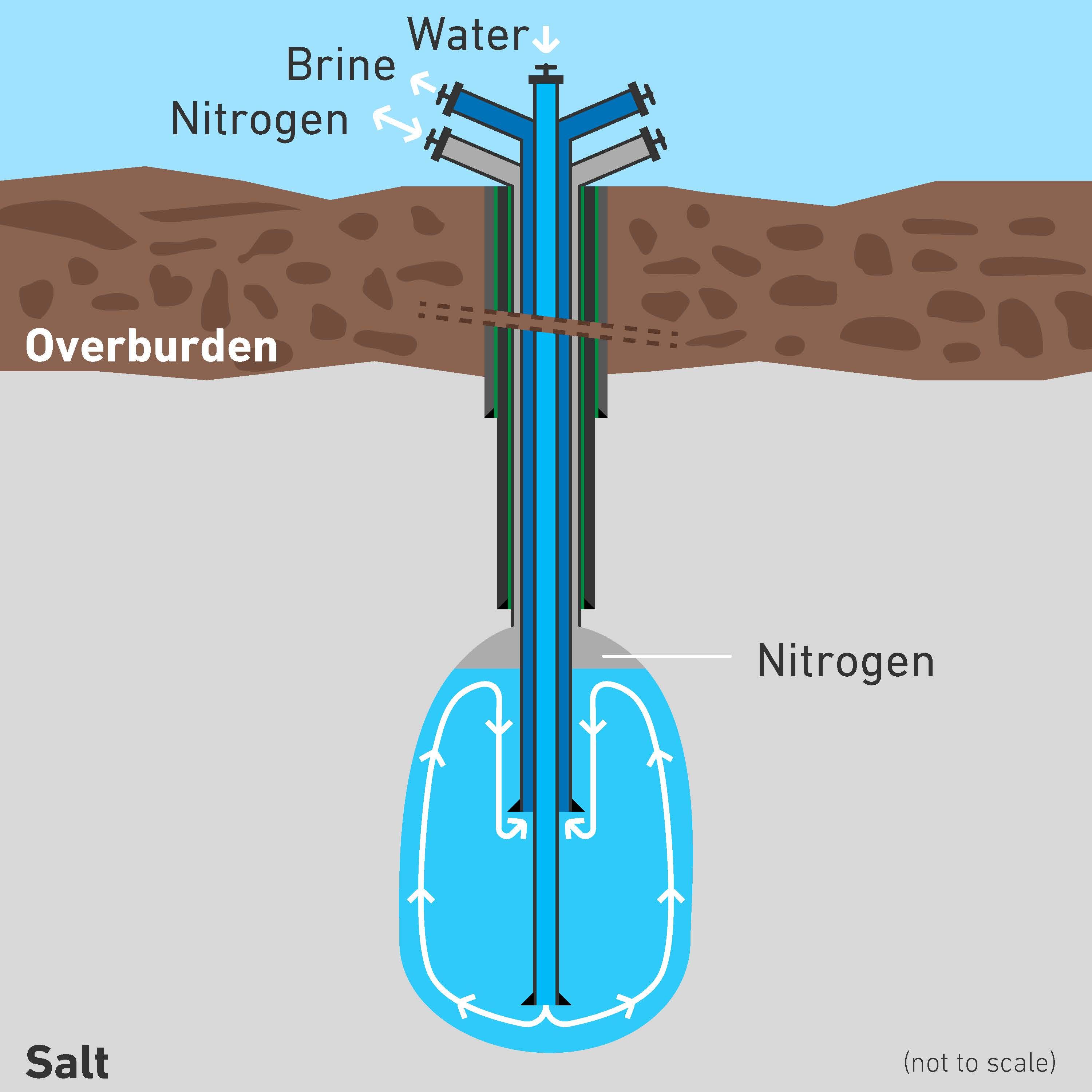
The caverns would be created by a process known as solution mining, which involves injecting water into the salt beds to create a brine solution. British Salt has been applying this method on the same brinefield for over 50 years. If the Salinae Hydrogen Storage project is consented and developed, Uniper's proposal is for hydrogen gas to then be injected into the cavern, pumping out the brine. Only the hydrogen then remains in the cavern, creating a working storage facility. The displaced brine would be used in the production of salt at British Salt’s Middlewich plant.

The UK has a geology that is highly favourable for salt cavern gas storage which would be able to significantly contribute to the large-scale seasonal and daily flexibility needs of the UK's future energy system. Uniper's existing gas storage facility, and any potential future hydrogen storage facility, play a key role in ensuring a secure and flexible energy system in the UK.


Hydrogen storage diagram
Timeline

Timeline

What are the timelines and how will the project progress?

Work on the initial drilling for the first two wells commenced at the end of 2025. This stage involves British Salt undertaking drilling in line with its existing approved solution mining plans but with additional steps added to support Uniper in gathering data with the aim of evaluating the site's potential for hydrogen storage. 

The project will be subject to Uniper being granted a development consent order for a hydrogen facility. We have started early engagement with the Planning Inspectorate (PINS) and stakeholders and would expect to carry out public consultation in early 2027, followed by a development consent application later in 2027 with a view to potential operation by 2033.

In the absence of a hydrogen market, and as a precursor to a competitive market framework, Uniper will also need UK Government to develop a bespoke business model to bring forward this first of a kind technology. 

Before submission of a development consent application and, to ensure local people are consulted on our proposals, we will set out and share a programme of public consultation with the host local planning authority - Cheshire East Council. This consultation programme will provide an opportunity for people in local communities and other stakeholders to ask questions and provide feedback on our proposals, and where possible, will help inform our development consent application.

Initial exploratory drilling commences for first two caverns

Expect to carry out public consultation

Potential operation

Project documents

Project documents

You can find relevant project documents here. 

Check back again soon. 

Latest news

Latest news

Contact us

If you would like to talk to us about the project, you can contact our Community Relations Team using the following contact information: 

Email us at [email protected]

Call us on 0800 368 9639

Visit our dedicated consultation website https://uniperuk.consulting/salinae/ 

Contact us

Press enquiries regarding the Salinae Hydrogen Storage project

Sara Revell

Uniper in the UK: Spokesperson
Portrait of Sara Revell

Find out more about hydrogen at Uniper

HHG hero image

Humber H₂ub® (Green) project

The Humber H2ub® (Green) project is a proposed large scale, low carbon hydrogen production facility, up to 120MW, at Uniper’s Killingholme site, and is expected to be operational later this decade. 

h2ballon2

Hydrogen storage

Uniper is developing large-volume hydrogen storage capacities by the end of the 2030s. You can find out about hydrogen storage and current projects at Uniper.

hydrogen in the periodic table

Our energy sources: Hydrogen

Hydrogen: a game changer. Find out how Uniper will be using hydrogen and derivative fuels to decarbonise high-emission industries that are difficult or impossible to electrify.

 Transparent hydrogen molecules floating against a bright blue background, symbolizing clean hydrogen energy.

Hydrogen in Sweden

Sweden has unique conditions for becoming a hydrogen country, with good access to fossil-free electricity and biogenic carbon dioxide. Uniper is actively working to pave the way for a competitive and sustainable hydrogen market.