

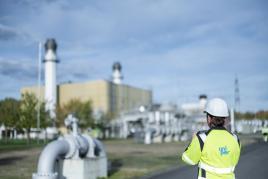


Two engineers walking through an Energy Storage plant in Etzel, Germany

Gas storage

Gas storage

At a glance

  • Gas storage facilities safeguard Germany's energy supply, covering a significant share of demand during peak winter consumption – at times more than 60% of natural gas needs. 
  • With 60 TWh, Uniper provides approximately one quarter of Germany's gas storage capacity, serving as an indispensable strategic reserve. 
  • The economic viability of storage operations is increasingly challenged by changing market conditions. 
Reliable energy in storage
Image
unverzichtbar_landingpage_assets_storage

Reliable energy in storage

Germany is an industrial nation. Among the country's most vital economic contributors are companies with high energy demand. It is no surprise, then, that Germany is Europe's second-largest gas importer. 

When gas demand rises in winter, supply bottlenecks can occur. That is when the true resilience of our system is put to the test. During recent cold spells, more than 60% of the natural gas required came from storage facilities. The fact that this works is critical for Germany. An exceptionally harsh winter or restricted gas deliveries can put immense pressure on the economy – if storage levels stood at just 75% in such a scenario, the resulting macroeconomic damage would amount to nearly €40 billion, according to estimates. At 90%, the damage would be roughly €25 billion lower. A difference with a direct impact on economic stability.¹ 

Uniper's six gas storage facilities are a decisive reserve for Germany's security of supply. With approximately 60 TWh, Uniper holds around one quarter of the country's storage capacity – ready to step in at short notice whenever needed. 60 TWh covers the annual heat demand of roughly 6 to 8 million households, depending on consumption.

Shrinking margins in gas storage
Image
Gas storage Epe

Why gas storing has become more difficult to operate economically today

Until the energy crisis in 2022, storage operators typically purchased natural gas in summer at low prices and sold it in winter at a premium. This seasonal price differential – the so-called summer-winter spread – was the foundation of an economically viable storage business. 

Since then, however, market conditions have shifted. Fill-level mandates and changing trading patterns have significantly narrowed seasonal price differentials. In some cases, summer prices now even exceed winter prices. This makes it considerably harder to fill and operate gas storage on an economically sustainable basis. 

Uniper therefore advocates a model based on the French approach, under which storage operators are compensated through secured revenue streams. This ensures that the necessary storage capacity can be maintained even when market revenues alone are insufficient to sustain operations. 

Protecting the economy
Image
gas storage etzel

A protective shield for the German economy

Full gas storage facilities protect the German economy from the effects of cold winters and supply disruptions. It stabilizes energy prices and can reduce economic damage by €25 billion.

FAQ

FAQ

Gas storage facilities play a central role in guaranteeing a secure energy supply. Our 80 TWh of storage capacity helps balance seasonal fluctuations and underpin security of supply in Germany and across Europe.

Uniper's gas storage facilities are systemically critical to Germany's energy supply and represent an indispensable backbone, particularly in winter. We cover approximately one quarter of the country's gas storage capacity and deliver gas when it is needed most. Our 60 TWh of storage capacity corresponts to the annual heat demand of roughly 6 to 8 million households, depending on consumption.

At present, operating storage facilities on an economically viable basis is a significant challenge. Since fill-level mandates were introduced during the energy crisis and LNG imports have increased, the price differentials between summer and winter months have narrowed considerably. As a result, the traditional revenue model of natural gas storage is no longer fully effective.

Learn more about our contribution to security of supply

Energy storage

Uniper Energy Storage operates 8 gas storage facilities in Germany, Austria, and the UK with approximately 80 TWh of capacity, contributing to a secure and flexible energy supply across Europe.

Etzel

Gas storage technology

Underground gas storage facilities store large volumes of energy – and in the future, hydrogen as well. They balance seasonal and short-term fluctuations, helping to stabilise the energy system.

h2ballon2

Hydrogen storage

Uniper is working on projects in Germany and the United Kingdom to test hydrogen storage in cavern and pore facilities, with the aim of balancing potential demand fluctuations in the future.